
Spray Painting

With our fully automated robotic spray painting, we can achieve a more reliable & consistent finishing. It would not overspray as the amount of dosage of paint being used is pre-determined.

Equipped with 8 manual booths to cater for low volume production.

Copper is spray coated into the inner part of the medical device enclosure. This is to create EMI shielding effect to absorb any emittance of harmful RFI and EMI from the electronic equipment.

Our UV curable coatings is typically clear, and provides scratch resistance to the sprayed part.
Printing

Efficiently used for unusually shaped substrates (e.g., Curve, Hollow, Spherical, Cylindrical, Angled and textured items) via a silicone pad and pressing it onto the object.

Silk Screen printing is a process that transfer the design onto the substrate. Mainly used for large equipment panels and can be used on nearly any substrates

Hot stamping is a dry printing method of lithography in which predried ink or foils are transferred to a surface at high temperatures.
Ultrasonic Welding

Ultrasonic welding is an industrial technique whereby high-frequency ultrasonic acoustic vibrations are locally applied to workpieces being held together under pressure to create a solid-state weld.
There are different joints in ultrasonic welding: Butt Joint, Step Joint, Tongue and Groove Joint, Shear Joint and Scarf Joint
Electroplating

For your desired satin finishings.
An example shown: Gold plating with satin gold lacquer
Labeling

Laser marking of polymers relies on carbonization or foaming processes caused by laser beam absorption. No ink is required, hence it is smudge and abrasion resistant as compared to conventional ink printing methods.

Allows for unique identification of products, especially for medical devices that is FDA/CE/HSA approved. It facilitates easy movement of products and enables efficient tracking and monitoring of inventory levels, leading to improved inventory control.
PCB Assembly

We can fully encapsulate PCBA components from dust & water, using Low Pressure Injection Molding. This meets the highest IP rating on product requirement (IP 67).
During the molding process, mold-set is relatively cold which can help to decrease the temperature of melted resin without damaging the PCBA or component. This process is widely used for wearables, non-tampering devices and other body wearables.
Machining

We have a wide range of CNC machining solutions to support our 24 hours in-house toolroom in Malaysia.

Wirecut Machine (aka wire EDM): Through hole


EDM (Electrical Discharge) Machine: To smooth the edges
Heat staking

Use the brass insert to heat the polymers until it melts and flows around the undercut of the insert to form a tight fitting.
Sealing

A heat sealer is a machine used to seal products, packaging, and other thermoplastic materials using heat.

To create a seal, high-frequency radio waves heat up various thermoplastic or film components (such as vinyl or urethane) to create a melt layer. Once the melt layer is created, the individual parts are pressed together and cooled, causing the product to fuse together and create high quality joints.

For fast curing, and quality bonding.

Conventional, low-cost adhesive method.
Packaging

The process involves heating a plastic sheet until soft and then draping it over a mould. A vacuum is applied sucking the sheet into the mould. The sheet is then ejected from the mould.

We are also able to cater to other forms of testing or validation protocols.
For example: Pull Test, Glue Strength, Plunger Force
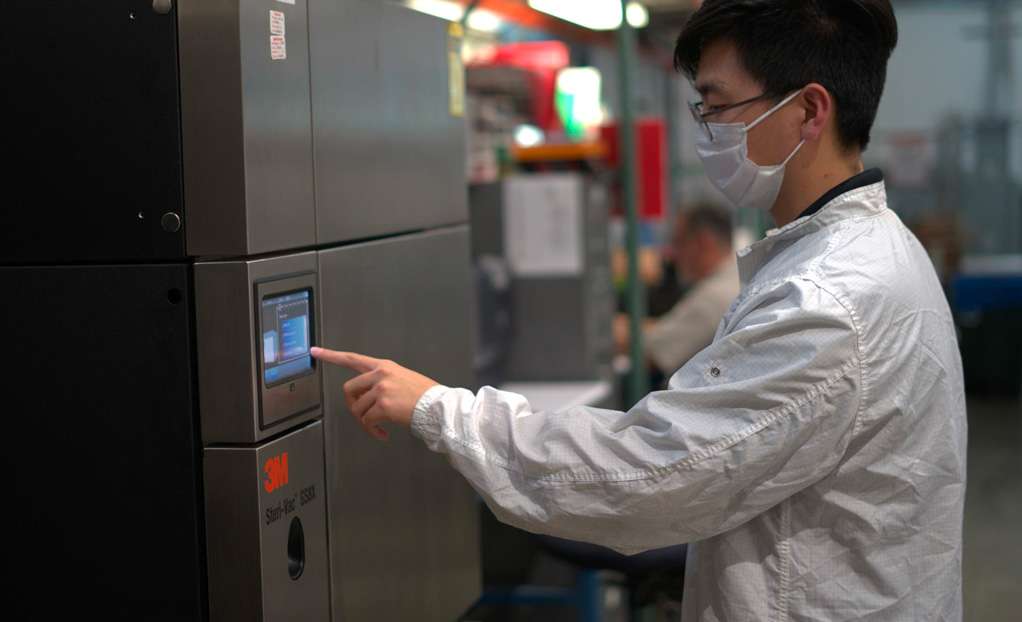
Sterilisation Methods
Sterilization is a vital step in medical device manufacturing to ensure patient safety, prevent infections, comply with regulations, and maintain the quality and efficacy of medical devices throughout their lifecycle.
- Patient Safety:
- The primary and most critical reason for sterilization is to ensure patient safety. Medical devices come into direct contact with patients, and any microbial contamination can lead to infections or other adverse effects.
- Infection Prevention:
- Sterilization prevents the transmission of infectious agents, including bacteria, viruses, and fungi, from medical devices to patients. This is crucial in preventing healthcare-associated infections (HAIs).
- Regulatory Compliance:
- Regulatory bodies, such as the FDA (Food and Drug Administration) in the United States and similar agencies worldwide, have stringent guidelines and requirements for the sterilization of medical devices. Compliance with these regulations is essential for market approval and ensuring the safety and efficacy of medical devices.

Cubic Printing

Capable of applying decorative pattern to any 3-Dimensional Product.